
A break, before you reach breaking point
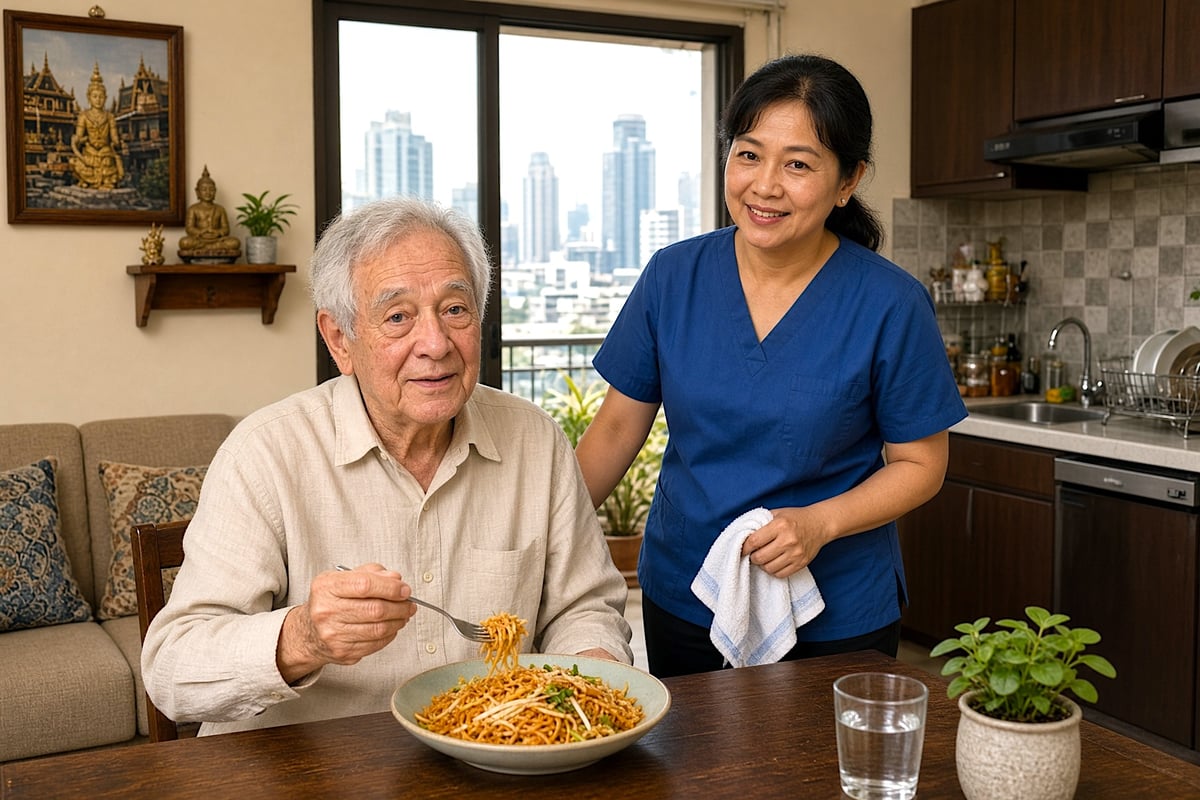
If you are the one caring for a parent or partner with dementia, you already know how the role quietly takes over. The broken sleep, the constant watching, the way your own appointments and friendships slide away. Respite care exists to give you back some of that ground. For a weekend, a week, or a regular afternoon, a trained caregiver steps into your place in your home in Thailand so you can rest, travel, or simply breathe, knowing your loved one is in steady hands.
ElderThai provides respite as a care business rather than a medical facility. A caregiver covers the daily routine you normally carry, and a Nurse Coordinator makes sure the plan matches what your loved one is used to, so your absence does not unsettle them.
Why rest is part of good care
Family carers often treat their own exhaustion as the price of love, but a worn-out carer cannot give their best, and the strain shows in patience, health, and sleep. Stepping away is not abandoning your loved one. It is protecting the person they rely on most. A rested carer comes back calmer and steadier, and that steadiness flows straight back into the care your parent receives.
Respite also lets you handle the rest of your life without guilt, whether that is a work trip, a medical procedure of your own, or a wedding upcountry you do not want to miss.
How respite blocks work
Respite is flexible by design, because no two carers need the same break. You might book a single weekend, a longer stretch while you travel, or a recurring slot each week that you can count on. The caregiver picks up your loved one's existing routine so the days feel normal from the inside, and the Nurse Coordinator briefs them on the details that matter before you go.
- Weekend cover so you get two full nights of real sleep
- Week-long blocks for travel, recovery, or family commitments
- Regular weekly hours that give you a dependable, repeating break
- Overnight respite when your own nights have become the hardest part
Common situations we help with
You have not slept properly in months
When your loved one wakes and wanders at night, your own sleep disappears, and the deficit builds week after week. A few nights of respite cover lets a caregiver take the night watch so you finally rest, which often does more for your wellbeing than anything else.
You need to travel or attend to your own health
Maybe you have your own surgery scheduled, or family upcountry you must visit. Respite means you can go without scrambling for last-minute help, because a trained caregiver holds the routine together in your absence and keeps you informed.
You are quietly burning out
The signs creep in slowly, the short temper, the tears that come too easily, the sense of being trapped. A regular respite slot gives you something to look forward to and a chance to refill before you run dry, which keeps you in this for the long haul.
You want a trial run of outside help
If you have never let anyone else care for your parent, a short respite block is a gentle way to test it. You see how your loved one responds to a caregiver, and you learn that handing over a few hours does not mean letting go.
The relief respite gives
Carers often tell us the hardest part was admitting they needed a break at all. Once they take one, the change is plain. They return less frazzled, more patient, and able to enjoy their loved one again instead of only managing them. Respite does not just rest you, it protects the whole arrangement, because the care you give at home is only as sustainable as you are.
How respite fits with longer-term care
For many families, respite is the first taste of help that later grows into something steadier. If short breaks reveal that the nights have simply become too much to manage alone, the natural next step is live-in dementia care with a caregiver present around the clock. To see how respite sits within the full range of support, our overview of Alzheimer's and dementia caregiving lays it out.
Start care at home
You are allowed to rest. A short conversation about your loved one's routine and the break you need is enough to arrange cover, and from there a trained caregiver and a Nurse Coordinator step in so you can step back for a while. When you are ready, your family can start care at home.
Where You Can Get Care
Elder Thai has caregivers in Bangkok, Nonthaburi, Phuket, Chiang Mai and Pattaya. Tell us where you are when you book and your care is arranged there.
This service starts from 2,200 THB per visit.
See full packages and pricing